
Table of Contents
- The Environmental Case for Refurbished Tech: What the Data Shows
- Refurbished vs New Tech Carbon Footprint: A Side-by-Side Comparison
- How to Verify Refurbished Quality Before You Buy
- The Benefits of Buying Refurbished Apple Products
- The Rebound Effect: When Refurbished Tech Doesn't Reduce Consumption
- Energy Efficiency and End-of-Life Recycling for Refurbished Devices
- Frequently Asked Questions
Last Updated: September 13, 2026
The Environmental Case for Refurbished Tech: What the Data Shows
Is buying refurbished tech actually sustainable? The short answer: in most cases, yes, and by a wider margin than most shoppers expect. The longer answer requires looking at where a device's environmental cost actually comes from. It isn't the years you spend using it. It's the moment it gets manufactured.

This guide from Smartcare Marketplace breaks down the manufacturing footprint, the comparison against new devices, the trade-offs nobody mentions, and how to verify quality before you commit. Below, we'll show you exactly where refurbished wins, where the logic gets shakier, and what to check before you buy.
Manufacturing's Hidden Carbon Cost
The bulk of a smartphone or laptop's lifetime emissions happens before you ever open the box. Raw material extraction, component fabrication, assembly, and shipping to retail all front-load the environmental damage. Once a device is in your hands, the ongoing energy consumption of charging and daily use is comparatively small.
That single fact is the foundation of the entire refurbished argument. When a device gets refurbished and resold, you're skipping the most carbon-intensive phase of its life entirely. A common mistake is assuming the sustainability benefit comes from using less electricity. It doesn't. It comes from not building a second device in the first place.
How Refurbishment Cuts Emissions
Refurbishment avoids the emissions tied to new manufacturing. A refurbisher inspects, repairs, replaces worn components, cleans, and re-grades a device, then resells it with a warranty. The energy and materials required for that process are a fraction of what new production demands.
What most guides miss is that refurbishment also diverts working hardware from the waste stream. Every device that gets a second life is one fewer unit entering the e-waste pipeline early. The U.S. Environmental Protection Agency's guidance on electronics recycling notes that consumer electronics contain valuable materials that are wasted when devices are discarded prematurely.
Refurbished vs New Tech Carbon Footprint: A Side-by-Side Comparison
The gap between refurbished and new is largest at the manufacturing stage, which is precisely where the bulk of emissions sit. Here's how the two paths compare across the key sustainability metrics.
| Factor | Refurbished Device | New Device |
|---|---|---|
| Manufacturing emissions | Avoided (device already built) | Full footprint incurred |
| Raw material extraction | No new mining required | New rare earth minerals and metals |
| E-waste impact | Diverts working hardware | Adds to future waste stream |
| Embodied carbon | Already spent once | Spent again per unit |
| Upfront cost | Lower | Higher |
The comparison isn't close on embodied carbon. A new device carries the full weight of its production; a refurbished one carries only the refurbishment process. For buyers weighing sustainability, that's the number that matters most.
How to Verify Refurbished Quality Before You Buy
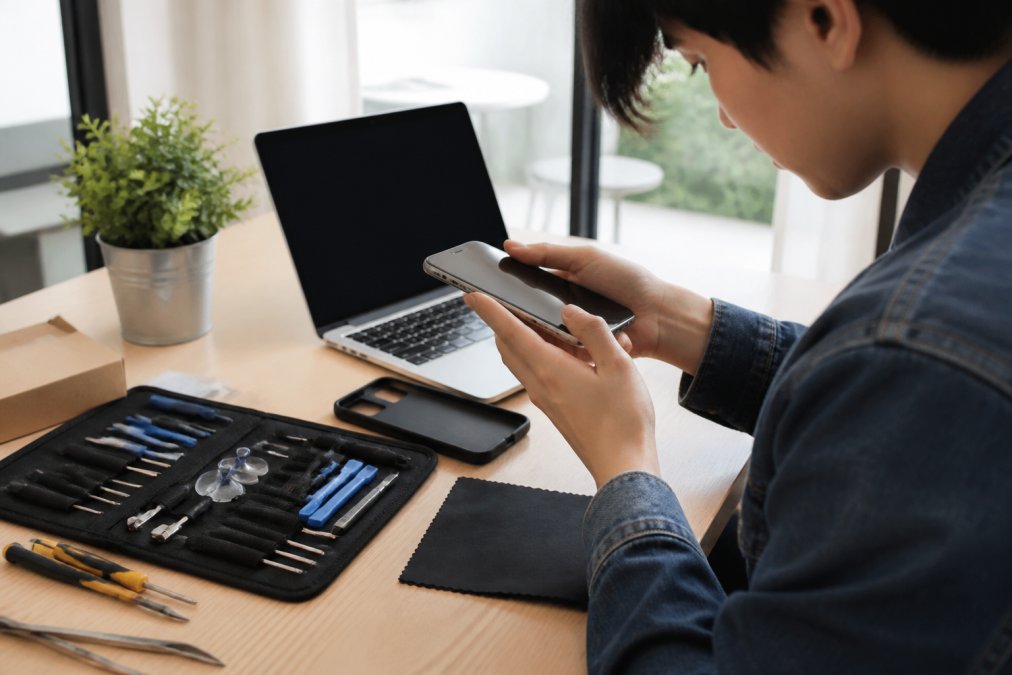
Verification is where most buyers get nervous, and fairly so. The refurbished market has strong sellers and sloppy ones, and the difference shows up in battery health, cosmetic grading, and return terms. The good news: a few checks separate a reliable purchase from a gamble.
Refurbished tech is previously owned hardware that has been inspected, repaired where needed, and resold with a stated condition grade and warranty. Quality depends entirely on the seller's process, not the category itself.
Certifications and Grading Standards
Grading standards tell you what you're actually getting. Look for a seller that states the cosmetic condition clearly, such as "excellent" or "good," and describes what that means in practice. Ask whether the device has been fully tested for functionality, not just cosmetically cleaned.
Battery Health and Return Policies
Battery health is the single most common concern, and it's a legitimate one. Ask the seller to confirm the battery has been tested and to state its condition before purchase. A device that dies after a month is the worst outcome for both your budget and the environment, since a failed device often gets replaced rather than repaired.
Return policies matter just as much. A clear, no-drama return window protects you if the device doesn't meet expectations. Check who covers return shipping before you buy, not after.
The Benefits of Buying Refurbished Apple Products
Apple hardware holds its value and its performance unusually well, which makes it a strong fit for refurbishment. A refurbished iPhone, iPad, or MacBook that's a generation or two behind current retail still handles everyday tasks smoothly, and the price gap against new is meaningful.
For budget-conscious students and young professionals, that gap is the whole point. A refurbished Apple iPad 5 with a 9.7-inch Retina display and 32GB of storage covers browsing, streaming, and classwork at a fraction of new pricing. A refurbished MacBook Pro 13-inch with Apple's M2 chip handles heavier workloads for years. The Apple Certified Refurbished program sets a benchmark for how thorough refurbishment can be, which is why buying from a seller with a documented process matters.

The Rebound Effect: When Refurbished Tech Doesn't Reduce Consumption
Here's the part most sustainability guides skip. Refurbished tech doesn't automatically reduce total consumption. It can, in fact, increase it, and the mechanism is worth understanding before you assume your purchase is a net win.
The rebound effect works like this: when a device gets cheaper, people buy more of them, or upgrade more often, because the financial penalty for doing so drops. Economists call the direct version of this the price elasticity of demand, a lower price pulls in buyers who wouldn't have purchased at full retail, and it also pulls forward purchases from people who would have bought later anyway. A refurbished iPhone at roughly half the price of new doesn't just serve the person who would have bought new. It also serves the person who would have kept their current phone another year.

Three Ways Refurbished Purchases Can Backfire
1. The upgrade-cycle accelerator. If a lower price tempts you to replace a working device sooner than you otherwise would, the net environmental gain shrinks or disappears. A phone you'd have kept for four years, replaced at year two because a refurbished upgrade looked cheap, doubles your device turnover, and turnover is the variable that matters most.
2. The second-device problem. Refurbished pricing makes it affordable to own a backup laptop, a spare tablet, or a dedicated streaming device. Each of those is a real device with a real embodied carbon footprint, even if it was manufactured years ago. The manufacturing emissions were already spent, but they were spent for someone else's use case, and you're now extending the total demand signal that keeps new manufacturing running.
3. The hand-me-down illusion. Passing a refurbished device to a family member feels like pure reuse, but if that family member would otherwise have bought nothing, the device still eventually reaches end-of-life and still needs replacement. The sustainability math only works if the refurbished unit is genuinely substituting for a new purchase that would have happened.
How to Tell If Your Purchase Is Substitution or Addition
Ask one question before you buy: Would I have bought a new device if this refurbished one weren't available? If the answer is yes, you're substituting, and the environmental case is strong. If the answer is no, if you're buying because it's cheap, not because you need it, you're adding to total consumption, and the benefit is much weaker.
The same logic applies to energy efficiency. A newer device may consume less power than an older one, so a very old refurbished model can partially offset its manufacturing savings through higher ongoing energy use. The trade-off is real, though manufacturing emissions typically dominate for most consumer electronics. For most buyers, the bigger lever is simply keeping a device in service longer, not buying more devices because they're cheaper.
Energy Efficiency and End-of-Life Recycling for Refurbished Devices
Energy efficiency and end-of-life handling are the two loose ends in the refurbished story. Older models can draw more power than current ones, so if a device runs continuously, a desktop, a monitor, a always-on laptop dock, that gap adds up over years of use. The U.S. Department of Energy's guidance on appliance and electronics efficiency is a useful reference for understanding how efficiency standards have shifted over time, and the ENERGY STAR product database lets you compare specific model-year power draw before you buy.
The Embodied Carbon vs. Operating Carbon Trade-Off
The trade-off is real but usually lopsided. Manufacturing a new laptop typically accounts for the majority of its lifetime carbon footprint, with ongoing electricity use making up a smaller share. That means a refurbished device that's two or three generations old almost always wins on total emissions, even if it draws somewhat more power. The exception is devices that run 24/7 for years, servers, always-on desktops, network gear, where operating energy can rival embodied carbon. For a phone or a laptop you charge daily and replace every few years, manufacturing dominates.
A practical rule: the older and more power-hungry the device, the more the efficiency gap matters. A refurbished tablet from three years ago is a clear win. A refurbished always-on desktop from eight years ago deserves a closer look at its power draw.
End-of-Life: What Actually Happens to a Refurbished Device
A refurbished device eventually wears out like any other, and how you dispose of it determines whether the sustainability benefit holds. Throwing it in the trash erases most of the gain and, in many states, is illegal, a growing number of states ban electronics from landfills, and many retailers accept most consumer electronics for recycling at no charge.
For a more rigorous path, look for a recycler certified under R2 (Responsible Recycling) or e-Stewards. Both are third-party standards that require downstream accountability, meaning your device's components aren't just shipped overseas and dumped. The U.S. Environmental Protection Agency's guidance on electronics recycling maintains a list of certified recyclers by state.
A Practical End-of-Life Checklist
- Wipe your data first. Factory-reset the device and remove it from any account locks before recycling. Most recyclers won't accept locked devices.
- Check for trade-in value before you recycle. Many manufacturers and retailers offer credit for working devices, which keeps them in service longer, the single biggest sustainability lever.
- Choose a certified recycler. R2 or e-Stewards certification is the simplest proxy for responsible downstream handling.
- Ask about data destruction. Reputable recyclers provide a certificate of data destruction; if they can't, find another recycler.
- Don't stockpile. A device sitting in a drawer isn't being reused and isn't being recycled, it's just delayed waste. Move it along.
Frequently Asked Questions
Is it a good idea to buy refurbished electronics?
Refurbished electronics offer a strong balance of cost savings and environmental benefit. A refurbished device avoids the carbon emissions tied to manufacturing new hardware, which accounts for most of a device's lifetime footprint. For budget-conscious buyers, refurbished Apple products like an iPad or MacBook can cost significantly less than new while still delivering reliable performance. The key is buying from a seller that tests, grades, and warranties their inventory.
How much carbon emission is saved by buying refurbished?
The exact savings depend on the device category and how it was manufactured. Manufacturing accounts for the majority of a smartphone or laptop's lifetime greenhouse gas emissions, so extending a device's life through refurbishment avoids most of that upfront carbon cost. Studies on circular economy models consistently show that reuse and refurbishment reduce embodied carbon far more than recycling alone, because recycling still requires energy-intensive material recovery.
Does buying refurbished tech help reduce e-waste?
Yes. E-waste is the fastest-growing waste stream globally, and most of it comes from devices replaced while still functional. When you buy refurbished, you keep a working device in circulation instead of sending it to a landfill or informal recycling operation. That directly supports landfill diversion and reduces demand for new raw material extraction. Choosing refurbished is one of the more effective individual actions for cutting tech waste.
How do I know the battery on a refurbished device will hold a charge?
Reputable sellers test battery health and disclose the results before sale. Ask for the battery cycle count or health percentage. A refurbished iPhone or MacBook should typically hold at least 80% of its original capacity to be considered good condition. Also check the return window and warranty terms. If a seller won't share battery data or offer a return option, that's a red flag for how to verify refurbished quality.